
Butterflies in the Bible: Are They a Biblical Symbol of Transformation?
Butterflies in the Bible are a useful little test of how Christian symbolism works. The image is beautiful. The theology people attach to it can be meaningful. But Scripture itself never assigns the butterfly an official meaning. The Bible gives us light, bread, water, vines, sheep, seeds, crowns, and the cross. The butterfly comes later.
That does not make butterfly imagery unchristian. Metamorphosis is a striking picture of change, so it is easy to understand why Christians have connected it with new life, renewal, and resurrection hope. The honest wording is simple: the butterfly can illustrate a biblical truth; it is not where the biblical truth comes from.
One passage commonly connected with transformation is 2 Corinthians 5:17:
“If any man be in Christ, he is a new creature: old things are passed away; behold, all things are become new.” — 2 Corinthians 5:17 (KJV)
The verse is about life in Christ, not butterflies. The butterfly is a later visual analogy—and that is enough. Christian art does not need to pretend every good symbol was secretly hiding in a verse.
Butterflies in the Bible: Are They Mentioned?
The short answer is no: butterflies in the Bible are not an explicit symbol because the creature is not named as such in the biblical text. The biblical meaning of butterfly is not a fixed scriptural category. That answer does not deny that butterflies existed in the region or that Christians later found the image useful. It keeps the line between Scripture and illustration clear.

Not as a distinct biblical symbol. Scripture mentions many insects, including moths, locusts, ants, bees, flies, gnats, fleas, and others. Bible encyclopedias note that butterflies were present in the region, but they are not specifically featured in Scripture. The United Methodist Church’s butterfly explainer likewise says the insect is not mentioned in Scripture while describing the later illustration.
The internet is very confident about symbols God never explained. Search “biblical meaning of butterfly” long enough and a normal garden sighting can become a prophecy, a message from the dead, a prediction about your next season, and possibly an Etsy listing. Scripture is much quieter. You can enjoy the butterfly, thank God for its beauty, and let it remind you of renewal without turning the moment into coded revelation.
Why Christians Associate Butterflies With Transformation
The transformation from caterpillar to butterfly is visually striking, so Christians have often used it as an illustration of change. The analogy can point toward new life and hope, spiritual growth and even the hope of bodily resurrection, but it begins in observation of creation and later Christian imagination. The apostles did not make the butterfly their explanation of conversion. Paul instead speaks of the new creation, and 2 Corinthians 3:18 also describes transformation by the Spirit.
It is easy to see why this image stays with people. A caterpillar enters a chrysalis and emerges in a strikingly different form. The change invites reflection.
Christian art and devotional culture have therefore used the butterfly as an illustration of spiritual renewal and sometimes resurrection. The analogy can be beautiful, but analogies have limits. Christian conversion is not biologically identical to metamorphosis, and resurrection is not simply the soul “turning into” a new creature the way a caterpillar becomes a butterfly.
Let Scripture explain the truth, and let the butterfly remain an illustration of it.
2 Corinthians 5:17: New Creation in Christ
Paul’s words about new creation stand within an argument about Christ’s death, reconciliation and a changed way of seeing people. Read 2 Corinthians 5:17–21 in context, where reconciliation follows the new-creation statement. The emphasis is on what God has done in Christ, not on the life cycle of an insect. A butterfly can remind a reader of this passage, provided the analogy does not replace the passage’s actual meaning.

“If any man be in Christ, he is a new creature.” — 2 Corinthians 5:17a (KJV)
Paul is speaking about reconciliation with God through Christ. The transformation is not merely personal growth or becoming a better version of yourself. It is tied to Christ’s death, a new way of seeing people, and the ministry of reconciliation.
A butterfly may bring change to mind. This verse tells us where Christian change begins: in Christ. The image is a reminder, not the source.
Romans 12:2: Transformation Through a Renewed Mind
Romans 12:2 calls believers to resist conformity and be transformed by the renewing of the mind. In context, Paul moves from God’s mercies into a life offered in worship and practical love. A butterfly image can make transformation memorable, but the verse is about discerning and living God’s will.
“Be not conformed to this world: but be ye transformed by the renewing of your mind.” — Romans 12:2a (KJV)
This is another verse frequently paired with butterfly images. The connection is visual rather than textual. Paul’s concern is a life reshaped by God rather than automatically conforming to surrounding patterns.
Renewal reaches into ordinary decisions—how we think, what we choose, and how we discern what is good.
John 3:3: New Birth
Jesus tells Nicodemus that a person must be born again to see the kingdom of God. In John 3:3, Jesus speaks to Nicodemus; the conversation concerns birth of the Spirit, not biological metamorphosis. A butterfly may be a memorable visual prompt, but it should not suggest that a person saves or remakes themselves by natural development alone.
“Except a man be born again, he cannot see the kingdom of God.” — John 3:3b (KJV)
New birth is one of Jesus’ own images for spiritual life. If Christians want a biblical symbol for beginning again spiritually, birth is much more explicit in Scripture than the butterfly.

Butterfly art need not be rejected. We simply need to distinguish the image Jesus chose from one Christians adopted later.
Resurrection and the Butterfly Analogy
Resurrection is more than personal improvement or a fresh attitude. First Corinthians 15 speaks of God raising the dead and transforming the body through Christ’s victory. The butterfly analogy may suggest change after apparent stillness, but 1 Corinthians 15:42 describes what is sown in corruption and raised in incorruption, while 1 Corinthians 15:52 speaks of the dead being raised. No insect life cycle can prove resurrection or capture its full meaning.
Butterflies are also used as symbols of resurrection because of the dramatic movement from one stage of life to another. Again, the analogy can help imagination, but the New Testament describes resurrection in its own terms.
“It is sown in corruption; it is raised in incorruption.” — 1 Corinthians 15:42b (KJV)
Paul’s discussion in 1 Corinthians 15 uses the image of a seed and a body raised in glory. That is a biblical analogy for resurrection. The butterfly can echo the general idea of transformation, but it should not replace Paul’s own teaching.
Does Seeing a Butterfly Mean God Is Sending a Message?
A butterfly sighting may be beautiful and personally meaningful, especially in a season of prayer or grief, but there is no biblical promise that it is a sign from God. Scripture does not give a rule that turns each sighting into a coded message or prediction. For a guide to listening and prayer without hunting signs, read Be Still and Know. Christians can thank God for creation without claiming certainty about an event that the Bible has not interpreted.
A butterfly sighting can be moving. It can remind you of God, someone you love, or a season you survived. Creation is allowed to stir gratitude and wonder. But “this reminded me of God” is different from “God sent this butterfly to tell me which decision to make.” The second claim asks the butterfly to carry an authority Scripture never gave it.
What About Butterflies After Someone Dies?
Grief changes what we notice. A butterfly near a funeral, an anniversary, or a familiar place can suddenly feel unbearably tender. You do not have to dismiss the comfort of the moment. But Christian hope has clearer ground than trying to prove the butterfly was a message from the person who died. It is enough to say, “This reminded me of her, and I was grateful.”

Christian hope after death is centered on God, Christ, resurrection, and eternal life—not on interpreting animals as spirits of loved ones.
If you are grieving, a butterfly may remind you of hope. You can hold that reminder gently without making it a biblical claim.
Christian Meaning of Butterfly Imagery
Christians can absolutely use a butterfly to call transformation, new life, or resurrection hope to mind. That is how art works: an image gathers meaning through use, memory, and tradition. We simply do not need to promote the illustration into a biblical command.
A butterfly can represent:
- transformation and changed life;
- new beginnings;
- renewal of the mind;
- resurrection hope;
- the beauty of God’s creation.
It is more honest to say, “Christians sometimes use the butterfly to symbolize…” than “The Bible says the butterfly means…”
Christian Symbolism Should Point Beyond the Symbol
A symbol can draw attention to a truth larger than itself. A cross necklace explicitly evokes the cross, while a butterfly is an optional analogy. Christian symbols are helpful when they lead readers back to Christ and a specific passage, and unhelpful when the object becomes a spiritual guarantee. The faith over fear guide similarly distinguishes faith from an automatic outcome. Isaiah 40:31 uses wings of eagles in its own context; it does not mention butterfly wings. The beauty of a butterfly need not be dismissed; it simply should not be asked to carry a claim Scripture never makes. John 11:25 grounds resurrection hope in Jesus Christ rather than in an object.
Christian symbols work best when they direct attention beyond themselves. The cross is central because it is tied directly to Jesus’ crucifixion. A butterfly is more like an artistic footnote: optional, evocative, sometimes deeply personal.
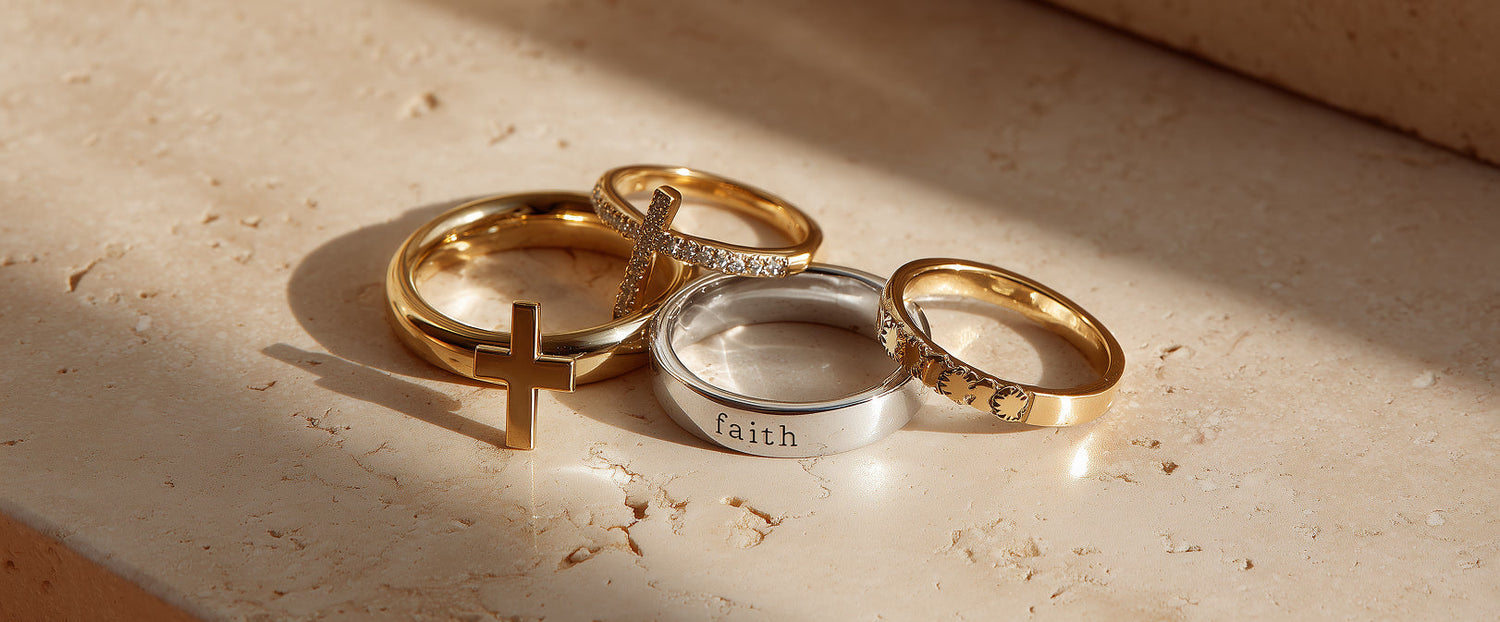
That is how butterfly jewelry, art, or clothing can work too. Something from a Christian jewelry collection can hold a story of renewal or mark a season of change. The object does not need supernatural power to be meaningful.
Better Bible Verses for Butterfly-Themed Gifts or Art
If you are pairing a butterfly image with Scripture, choose a verse for its own meaning first. The mustard seed guide models careful use of a nature image. Read the paragraph surrounding it and describe the image as an illustration, not as the verse’s intended symbol. This small wording choice respects both the text and the person receiving the gift.
For a Christian gift, journal, card, or design, choose a passage that truly teaches the theme the butterfly is meant to illustrate.

- 2 Corinthians 5:17 for new creation in Christ.
- Romans 12:2 for transformation through a renewed mind.
- John 3:3 for new birth.
- 1 Corinthians 15:42 for resurrection hope.
- Lamentations 3:22–23 for fresh mercy and renewal.
Quote the verse accurately and let it carry the meaning. The butterfly can offer a visual reminder.
Biblical Meaning of Butterfly Claims: What Counts as Evidence?
A Bible symbol is an image the biblical writer uses in a specific setting. A claim about the biblical meaning of butterfly imagery therefore needs a textual source, not only a resemblance. Jesus explicitly calls Himself the bread of life and uses vine language for life with Him; those images have textual anchors. Matthew 6:19 names a moth that destroys earthly treasure, not a butterfly. A butterfly can be a Christian symbol in art without becoming a symbol that the Bible itself names. This answers the phrase “butterfly symbolism Christianity” more honestly than presenting every association as Scripture.
The Bible does use symbols, and their meaning comes from the text. Genesis 9 gives the rainbow covenant meaning. Bread and wine carry explicit significance in the Lord’s Supper. Jesus calls Himself the good shepherd and the true vine. Revelation’s vivid images belong to its own visions.
A beautiful thing in nature does not acquire a fixed biblical meaning simply because we give it one later. The butterfly can be a helpful Christian symbol, with a meaning drawn from analogy and tradition.
The same care helps with feathers, cardinals, numbers, and repeating times on a clock. Scripture gives Christians a firm foundation without turning every familiar pattern into a coded sign.
Butterflies and Creation
Butterflies invite wonder at the diversity of creation. Christian apparel can display the image as art without claiming the Bible names it. Psalm 19:1 speaks of the heavens declaring God’s glory, and Christians may respond with gratitude to nature’s beauty. The caterpillar, chrysalis and metamorphosis can be studied as creation, yet that general response does not make every creature a private omen or supply a precise doctrine from its life cycle.
Even without a special symbolic meaning, butterflies can still direct attention toward God as Creator. Their life cycle, wing patterns, migration, and ecological role are part of the created world Christians receive with wonder.
“The heavens declare the glory of God; and the firmament sheweth his handywork.” — Psalm 19:1 (KJV)
Psalm 19 speaks of the heavens, not butterflies. Still, it models a response to creation that Christians recognize: what God has made can stir worship.
Wonder and superstition ask different things of the moment. We can say, “This creature makes me grateful to God.” Claiming that it guarantees a hidden instruction from God goes further than Scripture allows.
“Butterfly Symbolism Christianity”: Art and Memorials
A Christian jewelry piece may incorporate a butterfly, though its personal meaning should be explained. Later Christian art has used butterfly imagery for new life and resurrection. The Lumencross home page presents faith-forward symbols; a memorial can use that language with care, especially when it also points to Christ’s promise and makes room for grief. Christian artists may draw from the resurrection, but Revelation 21:5 speaks of God making all things new and 1 Peter 1:3 roots living hope in Christ. Tradition and art can teach and comfort, but they should be identified as interpretation rather than biblical quotation.
That visual association explains why butterflies appear in Christian art, funeral programs, memorial jewelry, greeting cards, baptism gifts, and resurrection designs. The image can be meaningful, especially beside a passage that actually teaches the theme.
Keep the image beside the text, rather than asking it to do the text’s work. With 2 Corinthians 5:17, it may recall new creation; with 1 Corinthians 15, it may suggest resurrection hope. In both cases, Scripture leads.

Using Butterfly Symbolism in Grief Without Overclaiming
When someone is mourning, certainty about a butterfly as a supernatural sign can place pressure on a tender experience. Listen first. If an image comforts them, you can acknowledge the comfort and, if welcome, read a passage of resurrection hope. Grief deserves presence more than a forced explanation. The Love Never Fails guide offers a related passage about love in context.
Grief can make familiar things newly vivid. A song, flower, bird, season, place, or butterfly may suddenly call someone you love to mind.
You do not have to dismiss that moment. Memory settles into ordinary things, and beauty on a hard day can feel like mercy.
Christian comfort does not depend on proving that a butterfly came from someone who died. You might say, “That butterfly reminded me of her, and I thanked God for the memory,” without claiming supernatural communication.
That gentler distinction can ease the pressure to look constantly for signs. Love, memory, and Christian hope do not depend on finding them.
Butterfly Symbolism and Baptism
Some Christians connect a butterfly’s emergence with baptism and new life. A Christian ring can serve as a personal reminder without defining a sacrament. The search phrase “butterfly symbolism Christianity” describes a later association rather than the New Testament’s own metaphor. Baptismal meanings differ across Christian traditions, so the image should not be used to flatten those differences. The New Testament names water, burial and rising with Christ in baptismal teaching; the butterfly is an optional later illustration. Ephesians 4:22–24 speaks of putting off the old self and being renewed, while Galatians 2:20 centers life in Christ.
Butterflies are sometimes used around baptism because baptism is associated with new life. Scripture itself uses death-and-resurrection language for baptism:
“Like as Christ was raised up from the dead by the glory of the Father, even so we also should walk in newness of life.” — Romans 6:4b (KJV)
Here, too, the verse supplies the meaning. A butterfly can picture it, but baptism does not draw its meaning from the butterfly.
Questions to Ask Before Calling Something a “Biblical Symbol”
A simple test helps: does Scripture actually use the image? Does the biblical writer explain it? Did later Christians develop the association? Am I describing a personal impression as though God promised it to everyone? Those questions leave plenty of room for beauty without inventing certainty.
- Does Scripture actually use the image?
- Does Scripture explain what it means?
- Is the meaning coming from the Bible or from later tradition?
- Am I presenting a personal association as though God revealed it?
- Does the symbol point people back to Christ and Scripture, or is it becoming the main focus?
These questions leave room for Christian art and imagination while keeping creativity distinct from revelation.
The safest principle is simple: enjoy the beauty of the symbol, but let Scripture do the teaching. If a butterfly prompts gratitude, wonder, or reflection on new life, receive that moment gratefully. You do not need to convert the moment into a prophecy in order for it to be meaningful.
Frequently Asked Questions
Here is the short version of the questions people usually mean when they search for butterflies and Christianity.
Are butterflies mentioned in the Bible?
Butterflies are not specifically presented as a biblical symbol. Reference works note that butterflies existed in the biblical region, but Scripture does not assign them a special spiritual meaning. The contrast matters: a later devotional use does not rewrite the text of the Bible.

What is the biblical meaning of a butterfly?
There is no direct biblical meaning assigned to butterflies. Christians commonly use them as modern symbols of transformation, new life, and resurrection because metamorphosis offers a vivid analogy. Read 2 Corinthians 5:17 in its reconciliation setting before using the image in a gift or lesson.
Does a butterfly mean a loved one is visiting?
The Bible does not teach that deceased people return as butterflies or communicate through butterfly sightings. A butterfly may feel personally meaningful in grief, but that should not be presented as biblical doctrine. If the memory brings comfort, you can honor it without claiming to know the cause of the sighting.
Can Christians wear butterfly jewelry?
Yes. There is nothing inherently unchristian about a butterfly design. If the wearer connects it with transformation or new life, that symbolism can be meaningful as long as the object is not treated as spiritually powerful. The meaning belongs to the person and the story they attach to it, while Christian hope rests in Christ.
What Bible verse goes well with a butterfly?
2 Corinthians 5:17 and Romans 12:2 are the most natural choices because they explicitly discuss new creation and transformation. The butterfly illustrates those ideas; it does not create their meaning. For resurrection specifically, read 1 Corinthians 15 as well; it describes God’s action more fully than an insect analogy can.
How Lumencross Uses Christian Symbols
At Lumencross, a butterfly can be used exactly this way: as a modern image of transformation, beauty, or new life without pretending the Bible assigned it an official definition. A symbol can carry memory and meaning without becoming a prophecy.
Beautiful Symbol, Clear Theology
Butterflies in the Bible is a search phrase with a wonderfully simple answer: the Bible does not give butterflies an official spiritual meaning.
Christians can still use them beautifully. Let 2 Corinthians 5 speak about new creation. Let Romans 12 speak about transformation. Let 1 Corinthians 15 speak about resurrection. Then let the butterfly do what a good image does—make the truth easier to remember.
It can stay lovely without becoming a secret code from heaven. I think that is more than enough.